Beeswax, White - New Zealand
Description
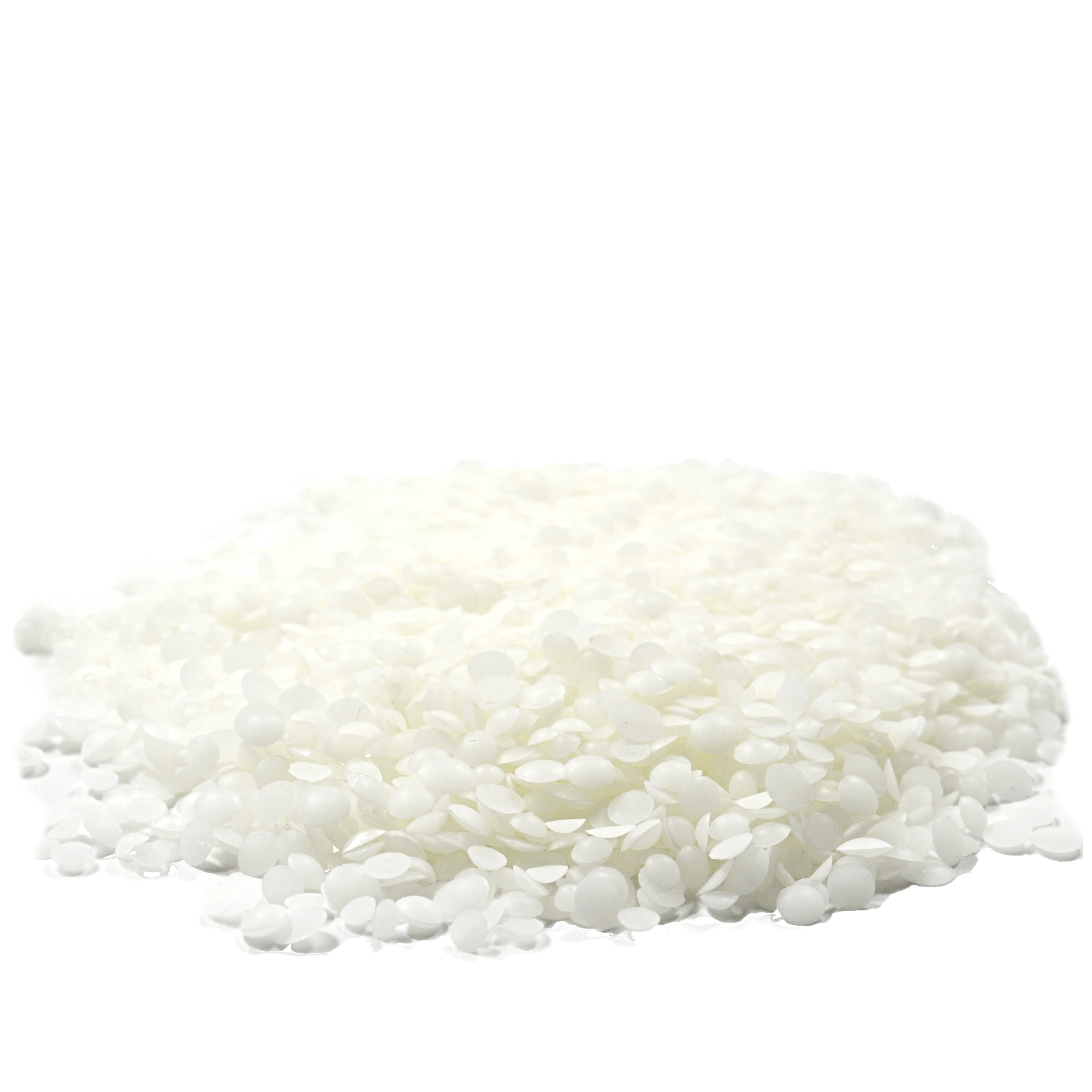
Pure beeswax is white in colour but usually, it appears yellow/orange coloured. This is due to natural staining from pollen and propolis gathered when the bees are producing the wax.
To remove the colouring and produce a white wax, the very highest grade lemon-coloured crude beeswax is gently melted over water and then allowed to settle.
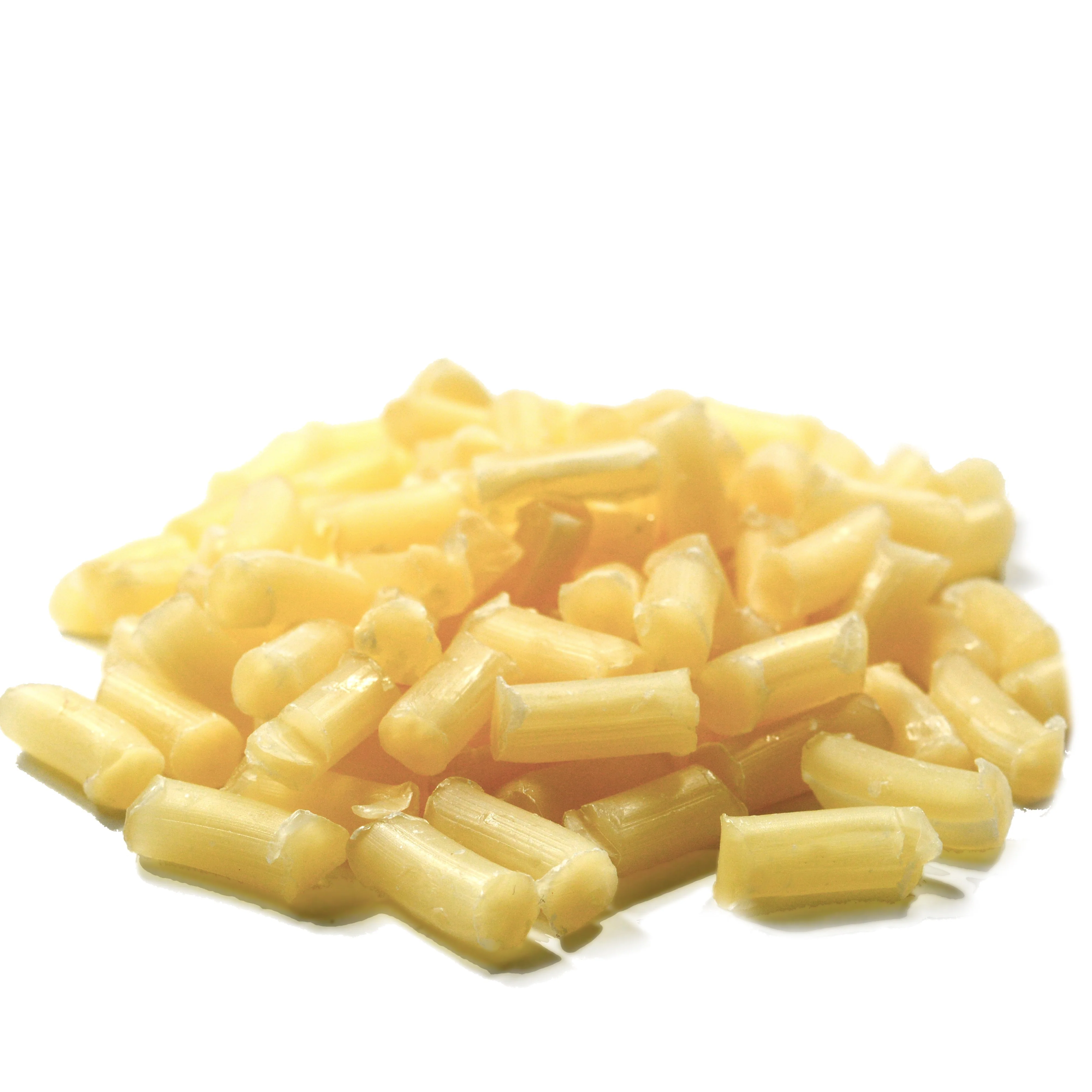
The colour is then removed using an organic and sustainable proprietary method. The beeswax is then micro-filtered to remove all dross before being passed through a pelletising machine.
Beeswax is produced by young worker bees and serves as the construction material for the hive. It is produced by special glands on the bee's abdomen and then chewed and moulded into intricate cells that store honey, bee larvae and royal jelly and more.
Chemically, Beeswax is comprised of esters, fatty acids and long-chain fatty alcohols. It is brittle at cold temperatures, becomes mouldable once above room temperature and melts at 62 – 65°C.
Learn more about beeswax and its uses.
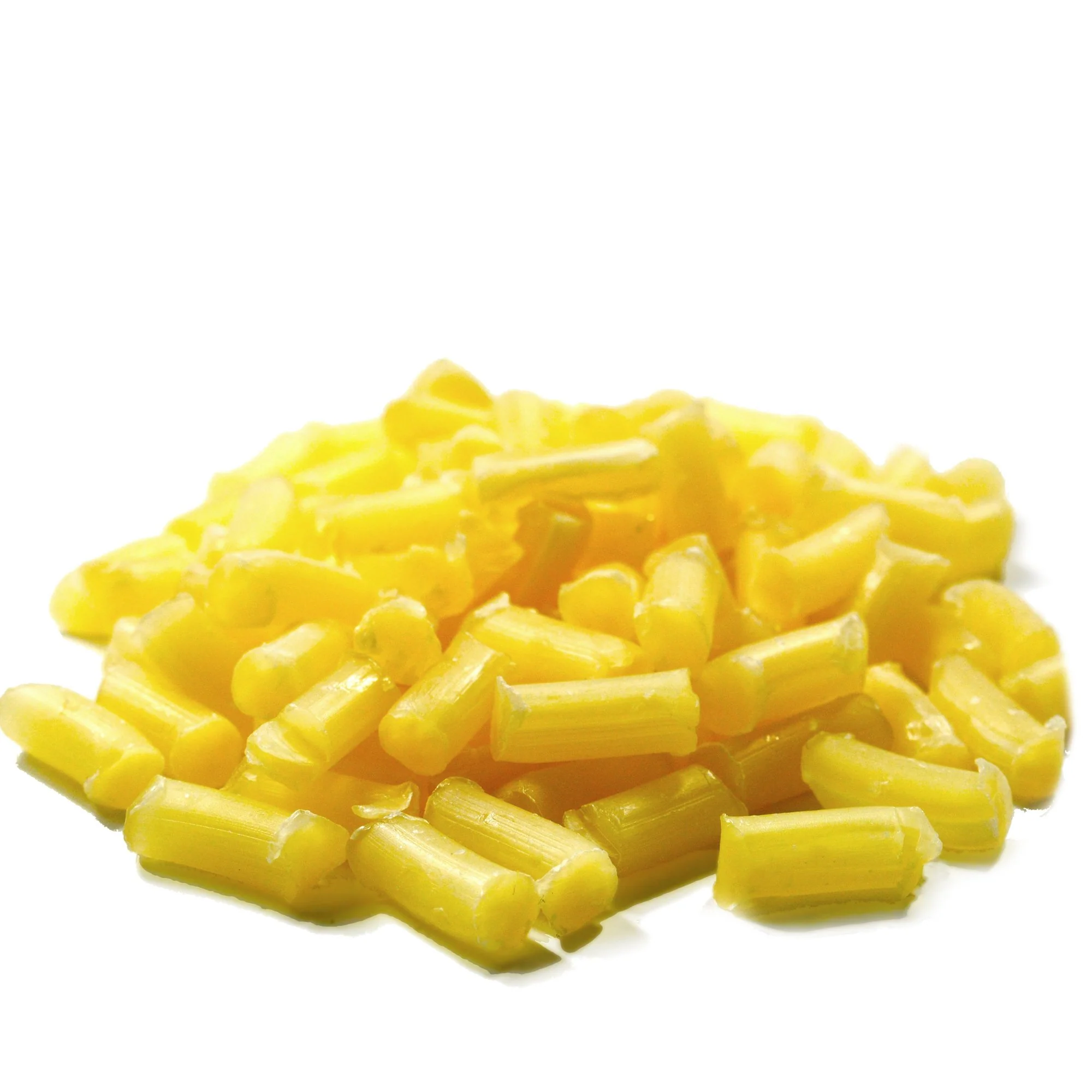
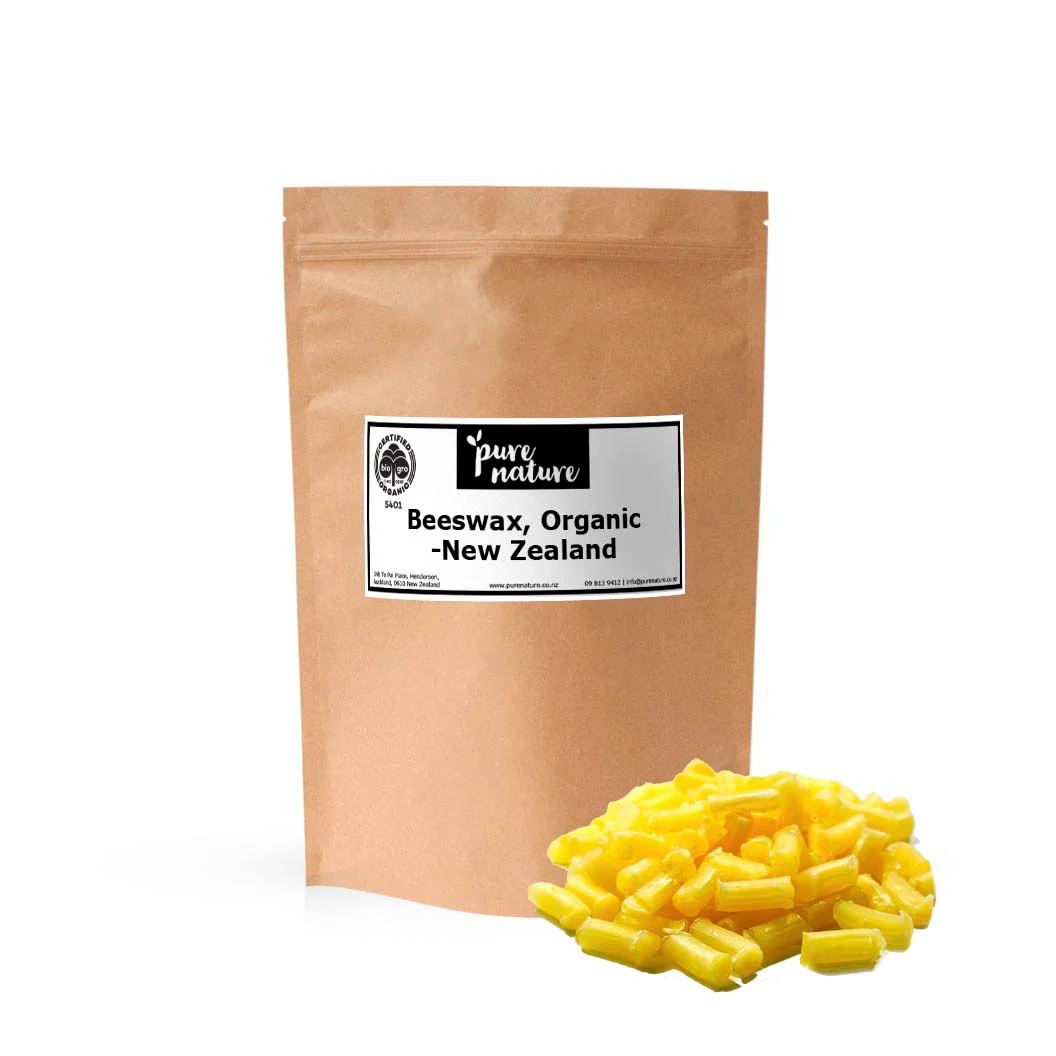
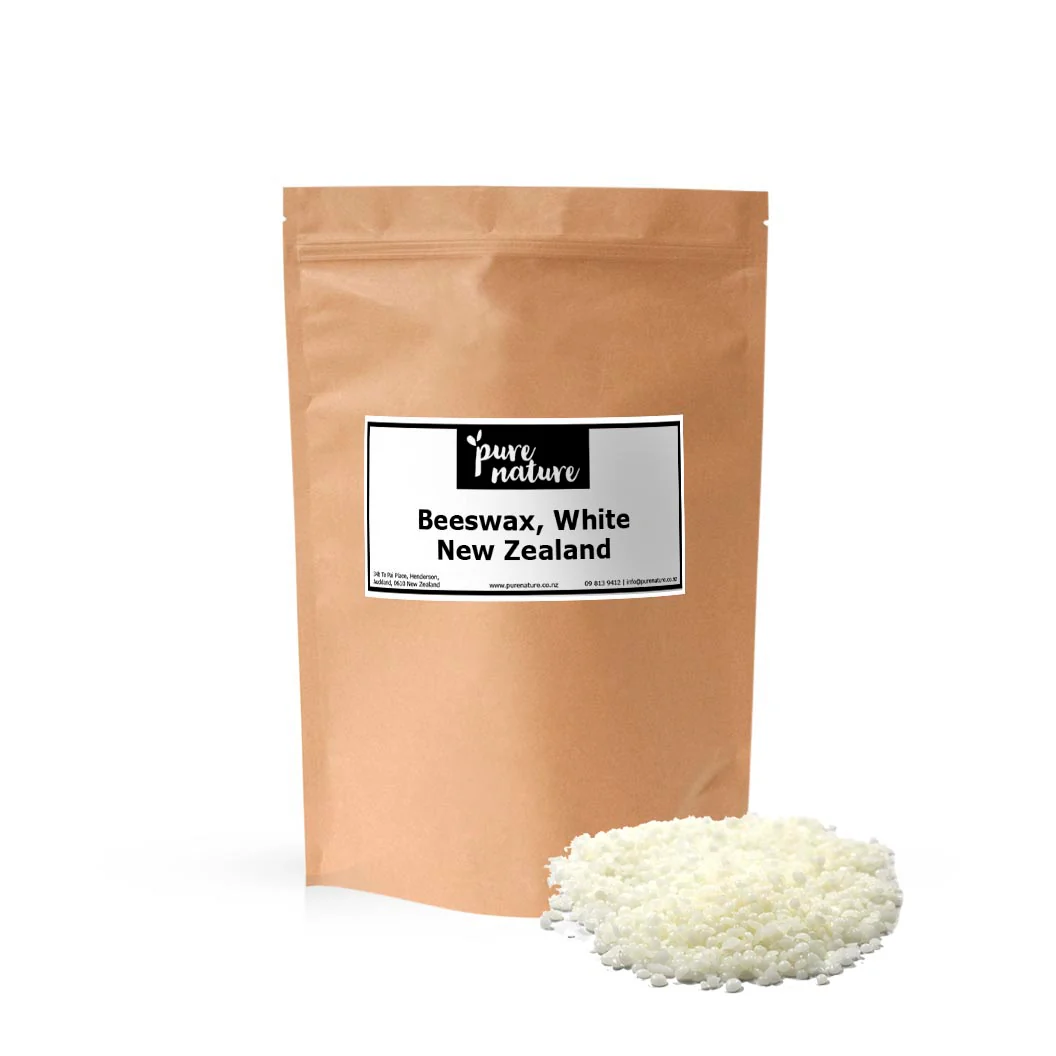
This product is intended for external use only. Please note, the image is indicative only, natural colour variations do occur between batches.
Original: $7.30
-65%$7.30
$2.55More Images
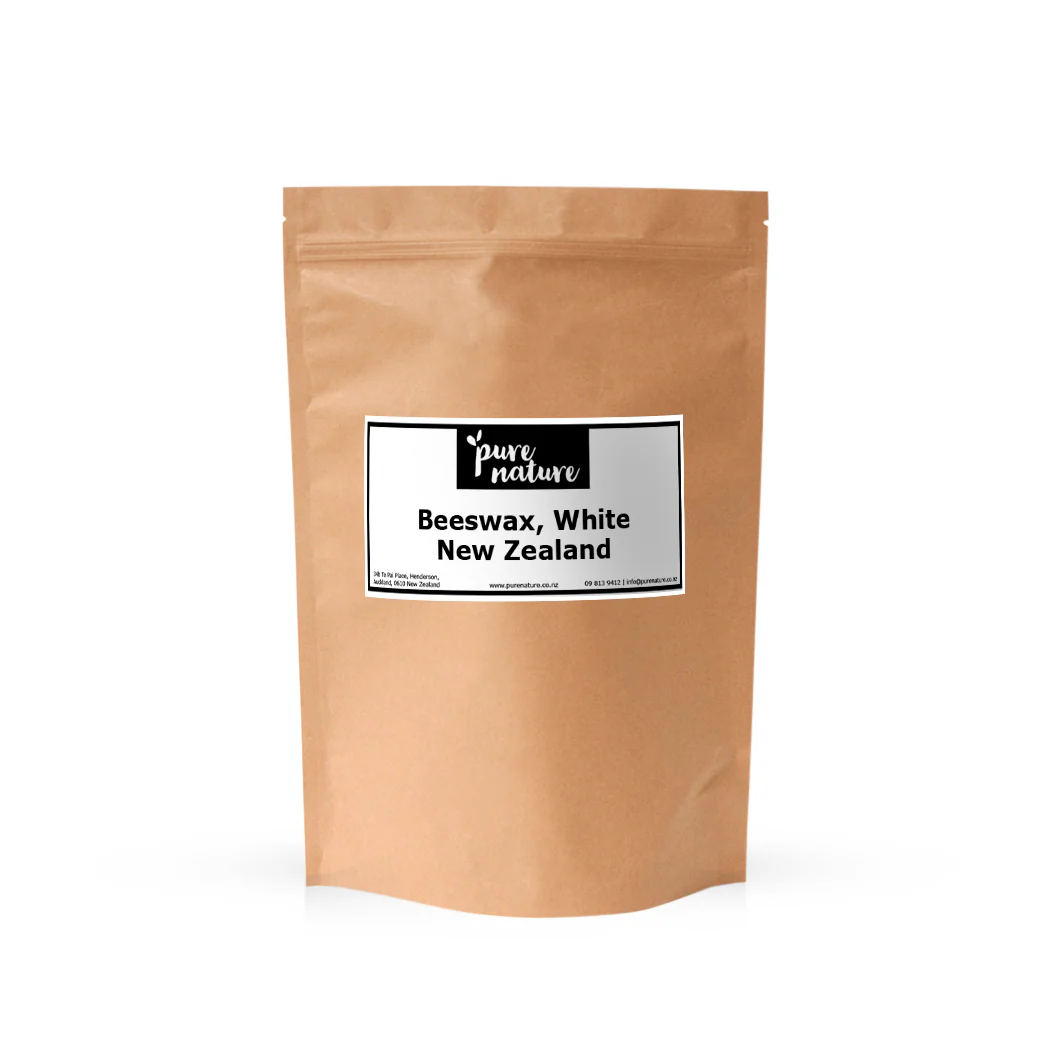
Beeswax, White - New Zealand
Description
Pure beeswax is white in colour but usually, it appears yellow/orange coloured. This is due to natural staining from pollen and propolis gathered when the bees are producing the wax.
To remove the colouring and produce a white wax, the very highest grade lemon-coloured crude beeswax is gently melted over water and then allowed to settle.
The colour is then removed using an organic and sustainable proprietary method. The beeswax is then micro-filtered to remove all dross before being passed through a pelletising machine.
Beeswax is produced by young worker bees and serves as the construction material for the hive. It is produced by special glands on the bee's abdomen and then chewed and moulded into intricate cells that store honey, bee larvae and royal jelly and more.
Chemically, Beeswax is comprised of esters, fatty acids and long-chain fatty alcohols. It is brittle at cold temperatures, becomes mouldable once above room temperature and melts at 62 – 65°C.
Learn more about beeswax and its uses.
This product is intended for external use only. Please note, the image is indicative only, natural colour variations do occur between batches.
Product Information
Product Information
Shipping & Returns
Shipping & Returns
Description
Description
Pure beeswax is white in colour but usually, it appears yellow/orange coloured. This is due to natural staining from pollen and propolis gathered when the bees are producing the wax.
To remove the colouring and produce a white wax, the very highest grade lemon-coloured crude beeswax is gently melted over water and then allowed to settle.
The colour is then removed using an organic and sustainable proprietary method. The beeswax is then micro-filtered to remove all dross before being passed through a pelletising machine.
Beeswax is produced by young worker bees and serves as the construction material for the hive. It is produced by special glands on the bee's abdomen and then chewed and moulded into intricate cells that store honey, bee larvae and royal jelly and more.
Chemically, Beeswax is comprised of esters, fatty acids and long-chain fatty alcohols. It is brittle at cold temperatures, becomes mouldable once above room temperature and melts at 62 – 65°C.
Learn more about beeswax and its uses.
This product is intended for external use only. Please note, the image is indicative only, natural colour variations do occur between batches.