
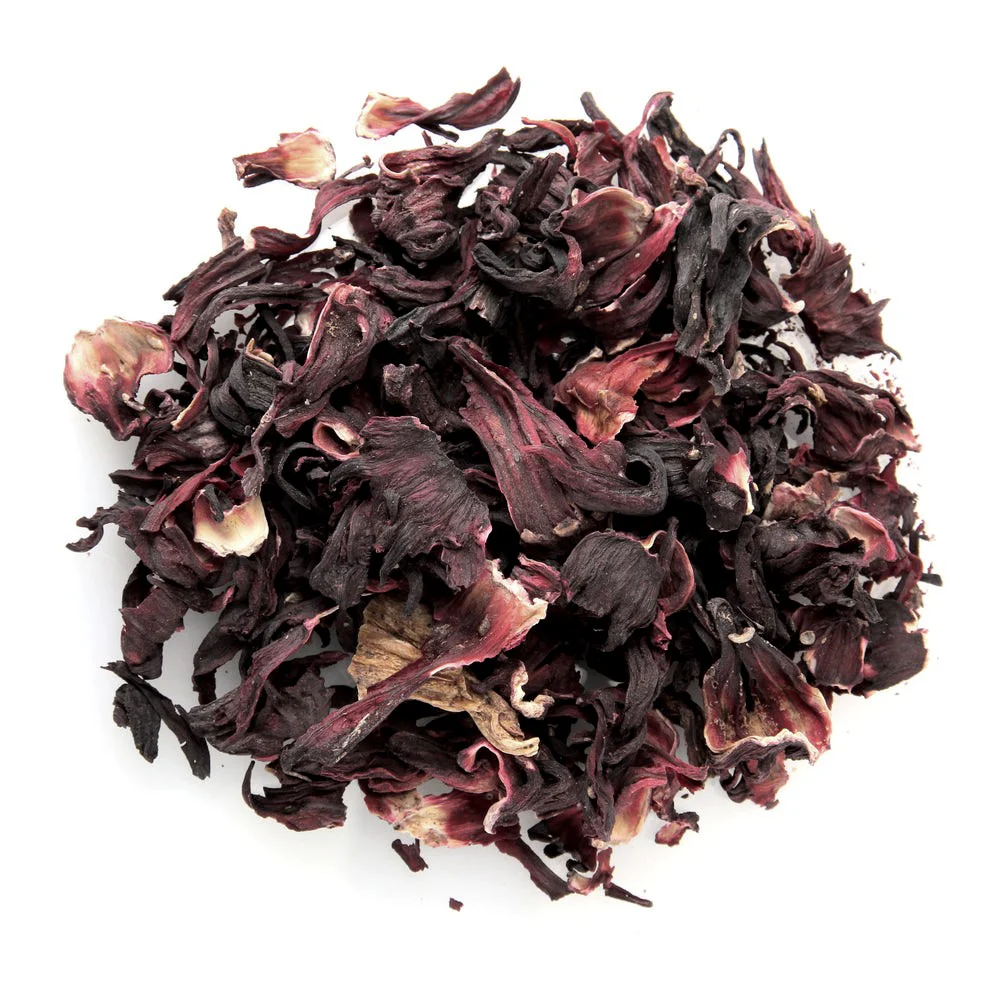
Hibiscus Flower, Dried
Description
North Africans have used hibiscus internally to support upper respiratory health, including the throat, and topically to support skin health. In Europe, hibiscus has been employed to support upper respiratory health, alleviate occasional constipation, and promote proper circulation.
Hibiscus tea, with its deep red color and tart, cranberry-like flavor, is not only a visual delight but also a treat for the taste buds, and can be enjoyed hot or cold.
It is commonly used in combination with lemon balm and St. John’s Wort for restlessness and occasional difficulty falling asleep.
Hibiscus is traditionally used in Iran to support normal blood pressure maintenance—a use that has been validated in several recent studies. Scientific interest in hibiscus has grown in the last several years, thanks to a small burst of published research studies, especially regarding cholesterol and blood pressure maintenance.
Applications:
- Herbal Tea
- Infused Oil
- Tincture
- Decorate the top of Cold Process Soap
- Potpourri (for the colour)
Original: $7.01
-65%$7.01
$2.45More Images

Hibiscus Flower, Dried
Description
North Africans have used hibiscus internally to support upper respiratory health, including the throat, and topically to support skin health. In Europe, hibiscus has been employed to support upper respiratory health, alleviate occasional constipation, and promote proper circulation.
Hibiscus tea, with its deep red color and tart, cranberry-like flavor, is not only a visual delight but also a treat for the taste buds, and can be enjoyed hot or cold.
It is commonly used in combination with lemon balm and St. John’s Wort for restlessness and occasional difficulty falling asleep.
Hibiscus is traditionally used in Iran to support normal blood pressure maintenance—a use that has been validated in several recent studies. Scientific interest in hibiscus has grown in the last several years, thanks to a small burst of published research studies, especially regarding cholesterol and blood pressure maintenance.
Applications:
- Herbal Tea
- Infused Oil
- Tincture
- Decorate the top of Cold Process Soap
- Potpourri (for the colour)
Product Information
Product Information
Shipping & Returns
Shipping & Returns
Description
Description
North Africans have used hibiscus internally to support upper respiratory health, including the throat, and topically to support skin health. In Europe, hibiscus has been employed to support upper respiratory health, alleviate occasional constipation, and promote proper circulation.
Hibiscus tea, with its deep red color and tart, cranberry-like flavor, is not only a visual delight but also a treat for the taste buds, and can be enjoyed hot or cold.
It is commonly used in combination with lemon balm and St. John’s Wort for restlessness and occasional difficulty falling asleep.
Hibiscus is traditionally used in Iran to support normal blood pressure maintenance—a use that has been validated in several recent studies. Scientific interest in hibiscus has grown in the last several years, thanks to a small burst of published research studies, especially regarding cholesterol and blood pressure maintenance.
Applications:
- Herbal Tea
- Infused Oil
- Tincture
- Decorate the top of Cold Process Soap
- Potpourri (for the colour)